 Administration SaaS
 From Cursor prototype to SaaS in 6 weeks: how a solo founder launched his AI-built app
Next.js TypeScript Supabase +7
Automate your processes with AI, built to stay reliable
Want to automate your business processes with AI, or have an AI agent built that you can actually trust? We build automations and agents with access to your real systems that stay reliable as the models underneath them change. Our senior engineers build the layer around it: the harness, the evals, the monitoring and the connections to your existing software.
The system around the model
The harness around it decides what the agent is allowed to do, which tools it has, and which evals warn you when a model update breaks something. That's where the real work is.
Self-optimizing systems
Systems that measure what works and adjust themselves, under human oversight. The agent does the volume, the human decides.
Legacy adapter layer
A clean layer between AI and your old systems that have no modern API. We connect what wasn't connectable.
Build on what you have
Already have an n8n flow, Make scenario, or custom script? We don't throw it away. We make it production-ready: tests, error handling, monitoring.
Projects where this came up, and what they delivered.
Administration SaaS 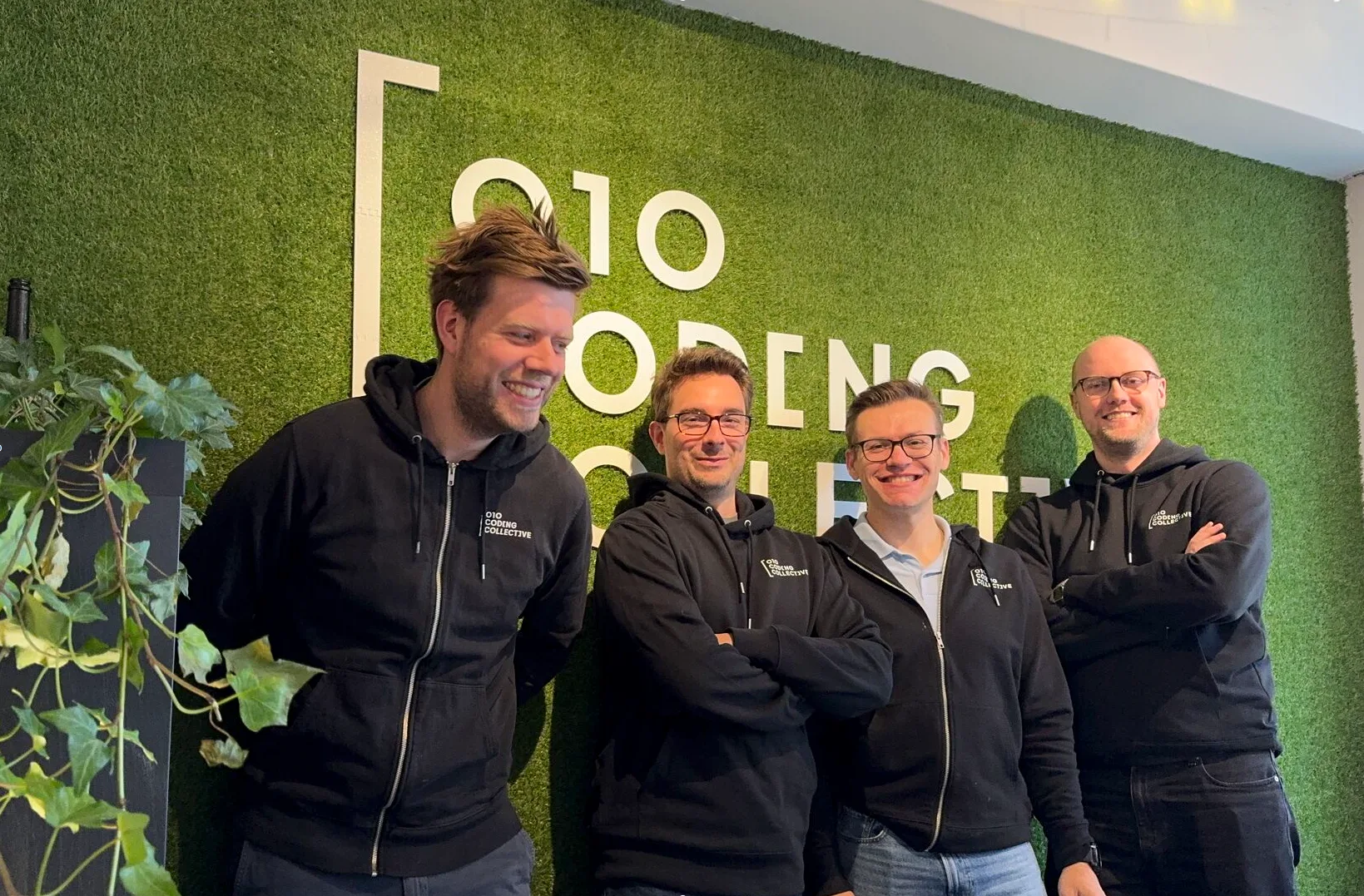 010 Coding Collective B2B Mobility Scale-up Tech Recruitment Agency
  Utilitarian
 Automating your business processes with AI, having an AI agent built, or making an existing n8n or Make flow production-ready: the pattern is always the same. The demo is easy to build, the reliability underneath is the real work. We’re the Rotterdam engineers who build it.
If you’re nodding: the tool is rarely the problem. What’s missing is the layer around it.
Anyone can call a model. A fetch to the OpenAI API is five lines of code. That’s why the demo feels so close to production. And that’s why almost everyone falls into the same gap.
Because the real work only starts after the demo. This is what knocks most AI projects over in production:
The model does the first 80% almost for free. The last 20% (edge cases, error handling, retries, what happens when the model returns something unexpected) is the real engineering work, and exactly what a demo never shows.
An agent that only reads is low risk. An agent allowed to write, send an email, change a record, start a payment, can also genuinely break something. That's where most of the attention should go, and where most demos skip right past.
The provider updates the model and your agent behaves differently. Subtly, but enough to break something. Without evals checking every version, you only find out when a user complains. An AI system without evals is a system you can't trust.
If you can't see what the agent decided and why, you can't debug, can't improve, and can't explain what went wrong. Observability turns an agent from a black box into a system you can trust.
n8n and Make are fantastic for getting started fast. But once it gets serious you hit the limits: no version control, no tests, error handling you don't control, and lock-in you didn't plan for. Fine to prove something can work, shaky as a foundation to run your business on.
Plenty of business software has no modern API. Want to connect AI to it, and you need an adapter layer that cleanly exposes the old system without rebuilding it. That's invisible work no demo ever touches, and exactly where integrations stall in practice.
We build the systems around your AI that make it reliable. What separates an impressive demo from something you’d run your business on is almost always the engineering around it, and rarely the model itself.
Anyone can call a model. The real work is the system around it: the harness that decides what the agent is allowed to do, the evals that warn you when an update breaks something, the logging that lets you see what’s happening. That’s software engineering. That’s where our strength is, in building that layer instead of wiring together yet another tool.
Jeroen , 010 Coding Collective
How you build such a trustworthy agent layer by layer, we wrote up in our deep-dive on building an AI agent you can actually trust: from permissions and tools to evals and observability. Still figuring out what an agent even is and when to use one? Start with what are AI agents.
The layer around the model that decides whether you dare trust an agent.
Systems that measure what works and adjust themselves, under human oversight. The agent does the volume, the human decides.
A clean layer between AI and your old systems that have no modern API. We connect what wasn't connectable.
Already have an n8n flow or Make scenario? We don't throw it away. We make it robust enough to lean on.
This isn’t theory. A Make flow that worked 80% we made production-ready. The whole story is in The Make flow that worked 80%. And the most meta proof: the site you’re reading now runs on a self-optimizing system like this itself.
A process eating your time, a flow you don't trust, or an agent you want to deploy? We walk through your situation and tell you honestly what production-ready means for you.
Best for: anyone with an AI idea or a flow that needs to be better
In 2-4 weeks we build a working prototype on your real data and systems, so you know whether it works before you invest big.
Best for: teams wanting to validate whether AI works for their case
We build the full system (harness, evals, monitoring and integrations) and keep operating it as models and your business change.
Best for: organizations that want to run AI reliably in production
* Pricing is indicative and depends on specific project requirements and scope.
We always start with a free consultation. In ninety minutes we look at your process or your existing flow, and discuss honestly what it takes to make it production-ready. Then we determine the best next step together. No obligations.
Possible next steps:
Not sure your vibe-coded prototype can even be the foundation? Start with a vibe coding audit, then you know what holds up before you build further.
Our team, with the people who work on this most at the top.






Services that often run alongside this one.
You've seen that it can work. Now it has to run reliably, with access to your real systems and resilient to model updates. We look together at what you have and what it takes to actually trust it.
In ninety minutes we walk through your process or existing flow and discuss what production-ready means for your case. Honest advice, no sales pitch.